When to Visit Dalat: Month-by-Month Weather & Travel Guide
Updated on November 25, 2025
The ideal time to visit Dalat is during the dry season from December to March. Expect good weather, clear skies, and perfect conditions for outdoor activities. January and February are our favorite months in Dalat!
Table of contents
1. Weather in Dalat
Sitting about 1,500 meters above sea level, Dalat enjoys a cool subtropical highland climate with an average temperature of around 20°C. This feels different from anywhere else in Southeast Asia. Most days stay between 15–25°C, and it rarely gets hotter than 30°C.
People often call Dalat the City of Eternal Spring, but don’t get fooled: it’s much colder than it sounds. On my first visits, I underestimated how cold it gets in the evening, especially on a motorbike. I ended up buying extra clothes just for this part of my trip (which is an experience on its own, Dalat is full of great vintage and second-hand shops!).
2. Seasons in Dalat: Dry and Rainy
Dry Season in Dalat
The dry season usually lasts from early December to late March. This is the best time for visiting Dalat. The weather stays pleasantly warm during the day, but the mornings and evenings can get surprisingly cool. Bring a light jacket and long pants, you will need them.
This is the time when I spend most outdoors. There are plenty hiking trails just outside of the city, a few great routes for motorbike day trips, and the town itself is so lovely to explore just walking around.
Rainy Season in Dalat
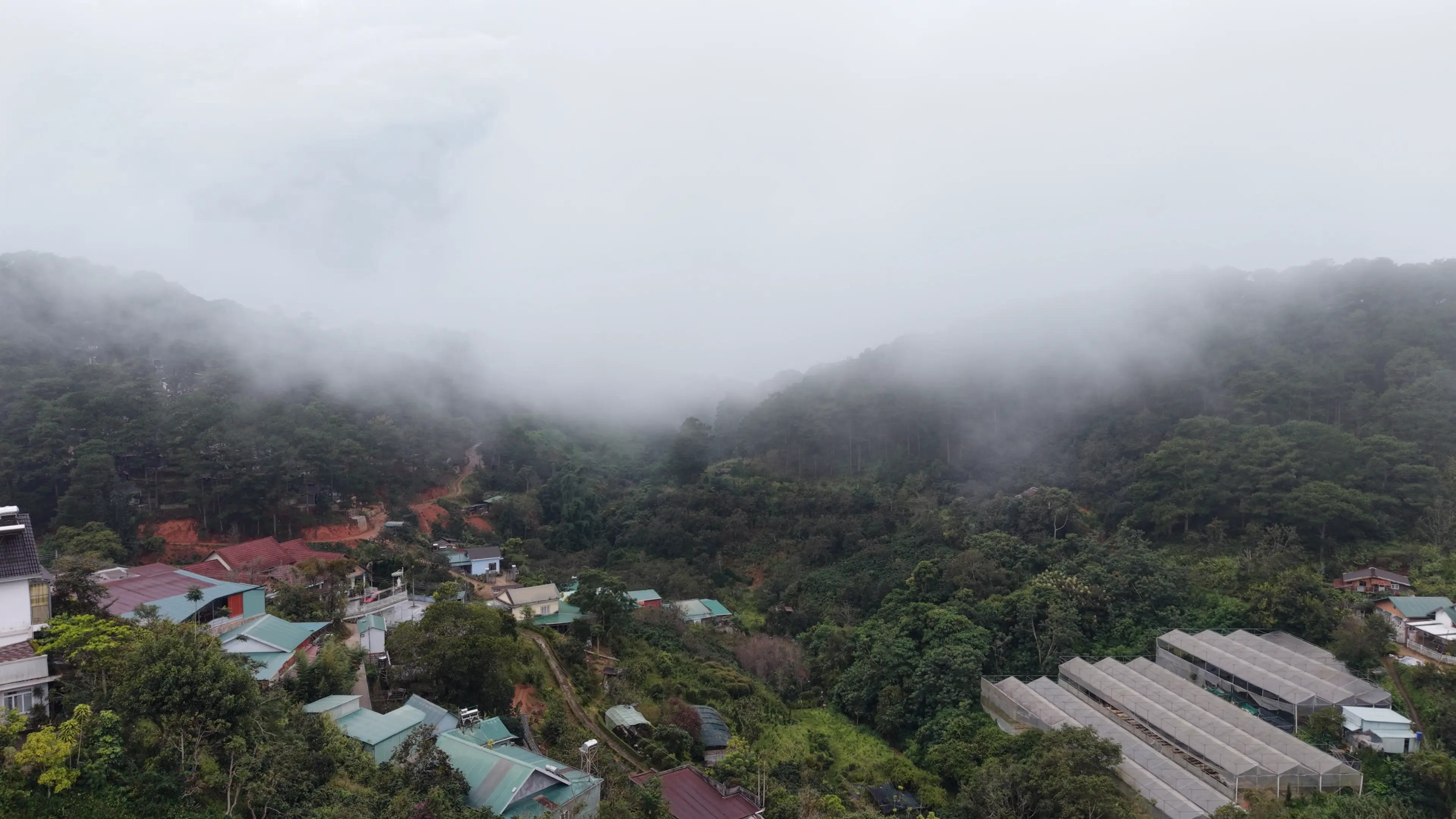
The rainy season starts in late April and lasts until December. The heaviest rains come between July and October, but they usually follow a predictable pattern which means you still can enjoy Dalat from a different angle. Mornings are often clear and dry, so it’s rather safe to plan your explorations from early morning until around noon when clouds start to gather. Then comes a strong rain. This is the perfect time to stay indoors and enjoy Dalat coffee shops, preferable somewhere cozy with a nice mountain view. The rain usually stop before it gets dark, leaving plenty of time to explore Dalat in the evening.
Temperatures stay around 18-25°C, same as in the dry season, but the rain and wind make it feel colder. I recommend bringing something warm to wear, but don’t worry much about raincoats, you can easily find one in town.
I actually love Dalat’s rainy season. It is the perfect time to slow down, stay cozy indoors, and watch the clouds drift right into the city. This is the most magical time for me in Dalat.
3. Best time to visit Dalat

January, February, March
The best months to visit Dalat. The weather stays pleasant with very little chance to rain from the very beginning of January to the end of March. This is my personal favorite time of the year.
April, May, June
During these months, the weather shifts from the dry season to the rainy season. April is still mostly dry, but by May the rains become more regular and reach their peak in June.
July, August, September
This is the peak rainy season in Dalat. It rains every single day, pattern is predictable: mornings usually stay clear, clouds start gathering around the noon, and heavy rain follows in the afternoon. By the evening it often stops, leaving enough time to enjoy the city at night.
October, November, December
The weather shifts back to the dry season. It still rains a lot in October, November gets better with less frequent rains, and by December the rains stop and the dry season begins.
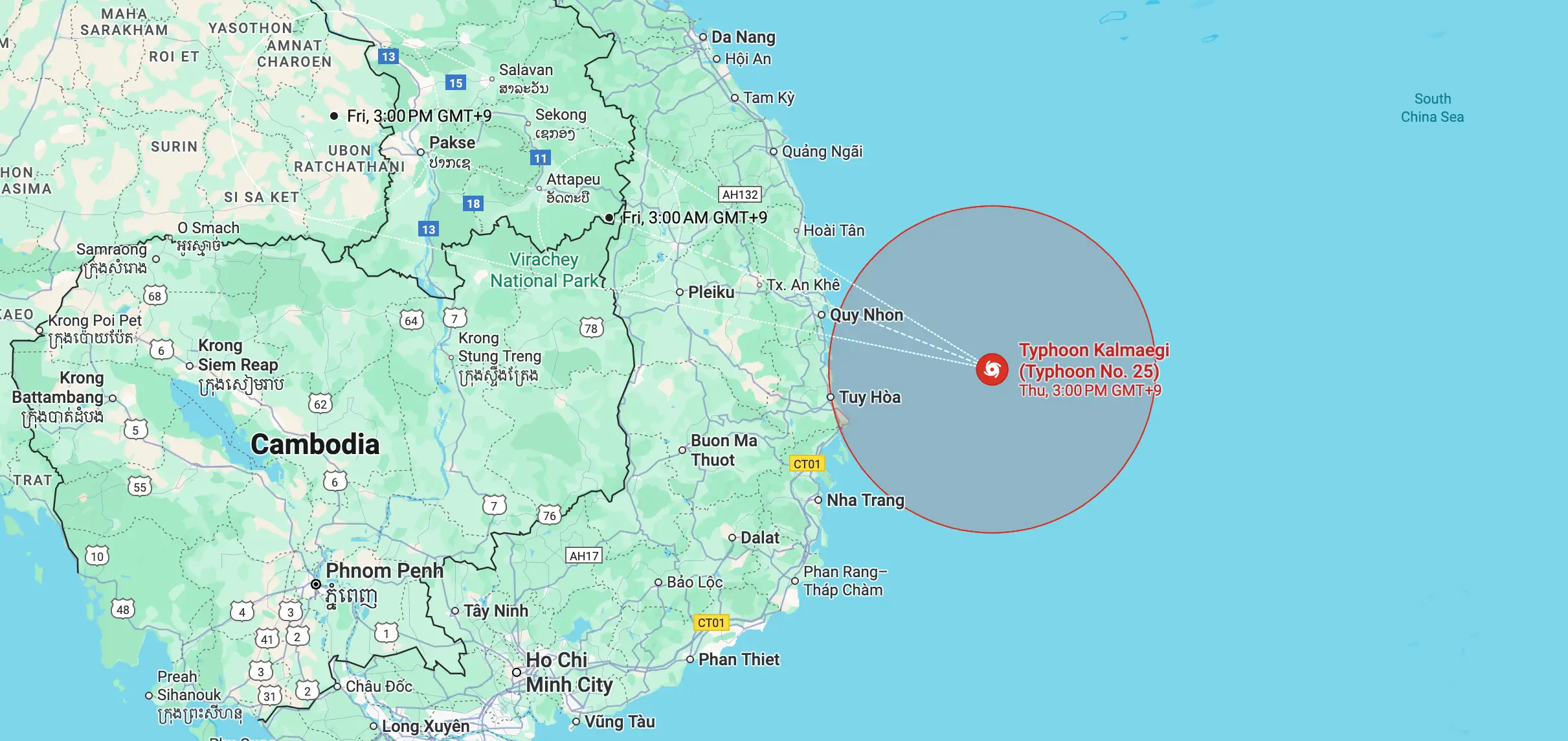
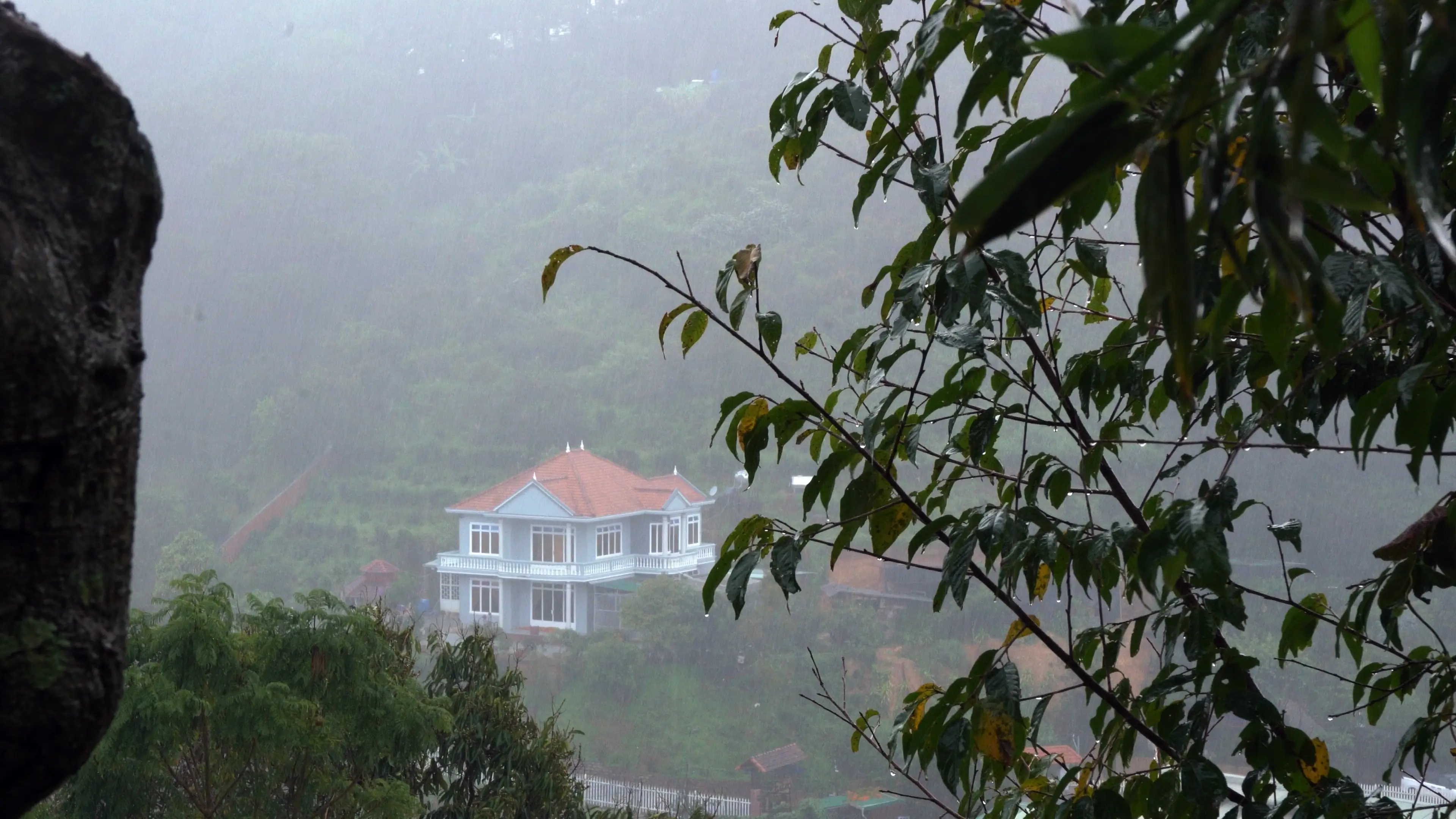
If you’re planning a journey across Vietnam, note that rainy and dry seasons differ by region. September and October are probably the worst time to visit Dalat. This is Vietnam’s typhoon season, when the central and northern coastal regions often get flooded. Dalat doesn’t get hit directly, but these typhoons still affect the weather here, making it unpredictable and much rainier than usual. I am writing this in early November, while Typhoon Kalmaegi hits Central Vietnam, just a few hundred kilometers north of Dalat. The rain hasn’t stopped since morning, leaving no chance for going outdoors.
What to plan next